People often ask me what it’s like to work offshore. The short answer: early, wet, windy – and absolutely worth it.
Here’s the long answer.
The harbour, before the sun
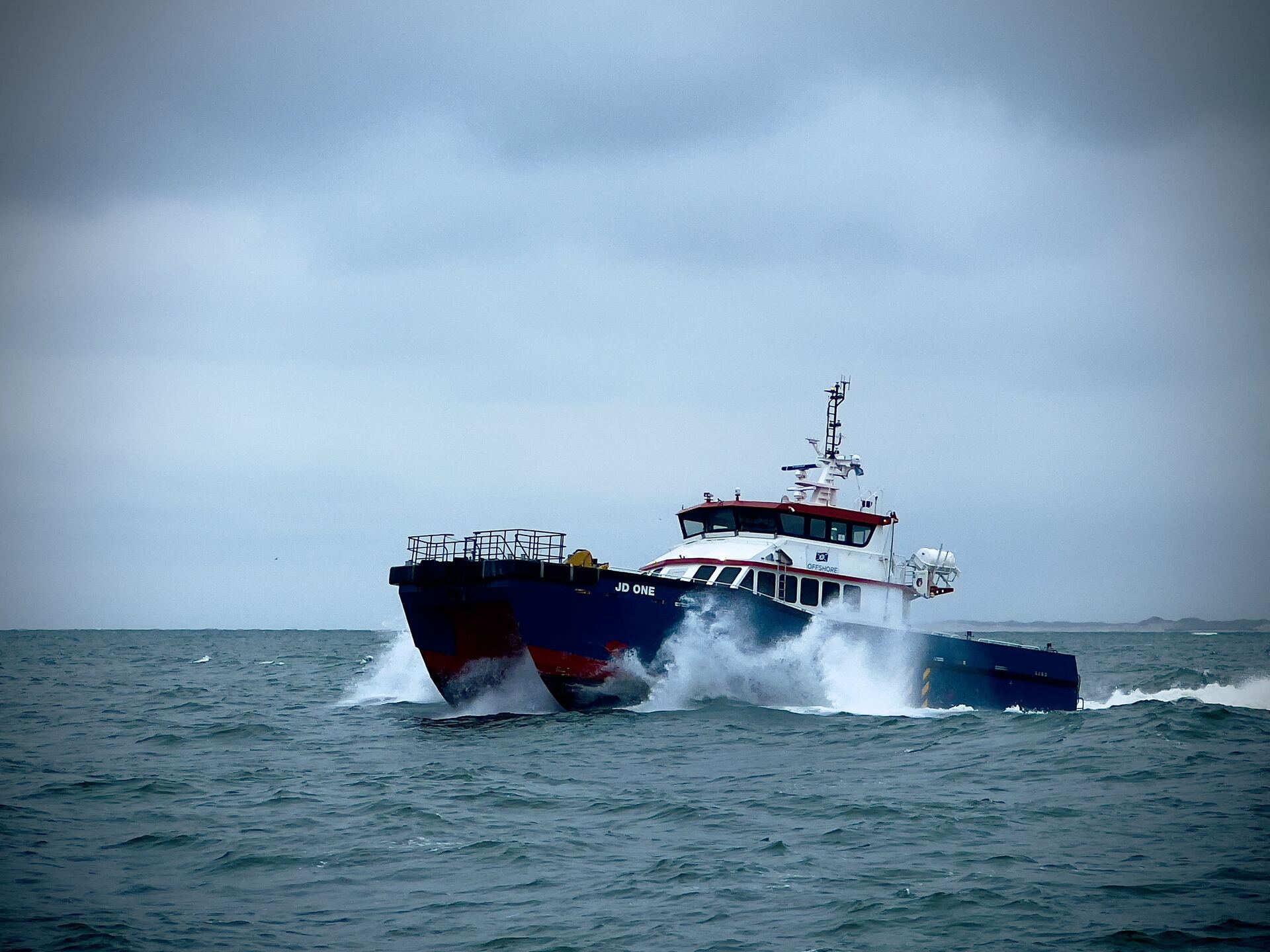
The day starts in the dark. I arrive at the harbour and I make a point of greeting everyone with a big, loud “good morning”. Waking up that early isn’t easy for anyone – especially when you know there’s a trip of several hours through the waves ahead of you. A bit of energy at the start helps the whole crew.
Coffee and a sunrise at sea
Once we’re on board, I usually make my coffee on the vessel, then find a spot outside and sit down to watch the sun come up over the sea.
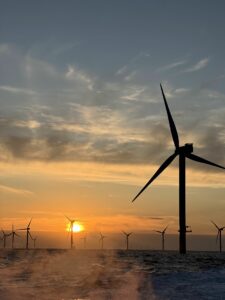
I’ve done this many times now, and I still can’t get enough of it. The light changes every minute, the turbines slowly appear on the horizon, and for a little while everything is quiet. It’s my favourite few minutes of the day.
I’ve seen a lot of sunrises at sea. I still can’t get tired of the view.
Safety briefing and gear
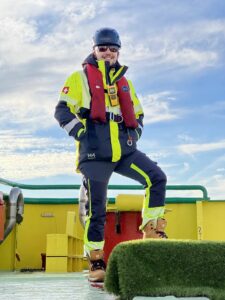
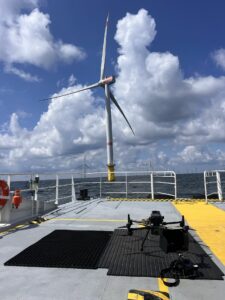
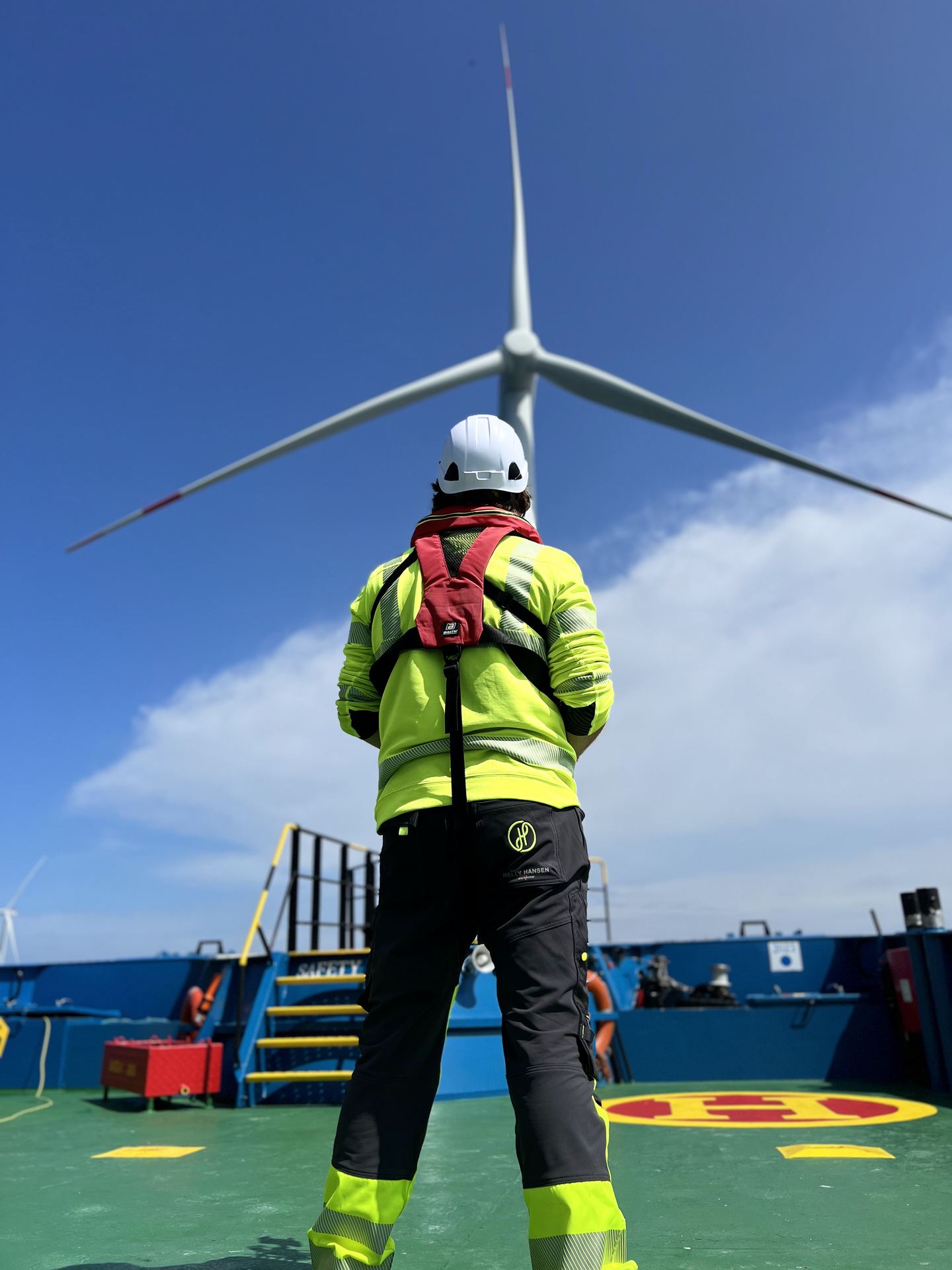
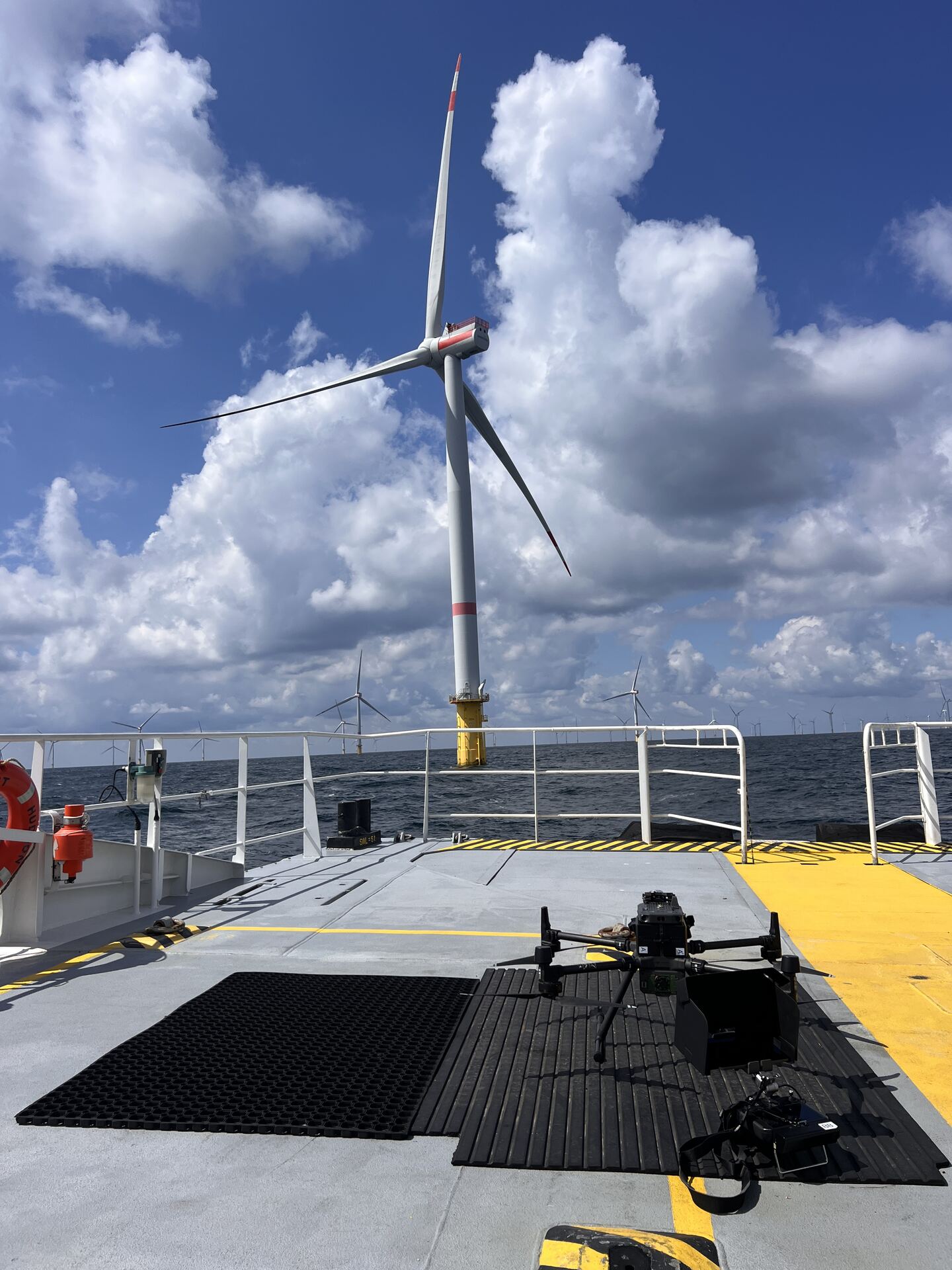
Before any work starts, we go through the safety briefing: the plan for the day, the weather, the sea state, permissions and every other operation going on around us. Then it’s time to gear up – PPE on, equipment checked, drone prepared on the deck.
Offshore, safety isn’t a box you tick once. It runs through the whole day.
Waiting for the weather
And then, sometimes… we wait.
This is the part I honestly hate. When the wind is too strong or the conditions just aren’t right, there’s nothing to do but wait for a better window. You’re ready, the drone is ready, the turbine is right there in front of you – and you can’t fly. Patience is part of the job, but I won’t pretend it’s my favourite part.
Flying from a moving deck
When the window opens, everything changes. Flying from a vessel is a different world from flying on land: the deck moves under your feet, the take-off and landing spot is never perfectly still, and the wind over open water does what it wants.
It takes focus, calm hands and a lot of experience – and this is the part I love the most. The moment the drone lifts off the deck and climbs towards the turbine, all the early mornings and long trips make sense.
The way home
When the work is done, the drone is packed away, the data is safe, and we head back to the harbour – usually a lot quieter than in the morning. Tired, salty, but happy.
What I take from it
Offshore work taught me more than any training course: how to stay calm when conditions change, how to work as part of a team on a vessel, and how to make the most of every weather window.
If you need a drone pilot who is at home on a vessel deck, take a look at my offshore services or get in touch.